
Having gone to Germany several times on brief visits, we had a strong urge to explore this fascinating country on an extended holiday. Making a choice of the places to fill our itinerary was difficult, because this country is replete with some of the world’s most attractive places.
We were delighted when we had an opportunity to visit the most picturesque spots in Germany: Tegernsee Lake resort in the Bavarian Alps, close to the Austrian border. The lady assigned to take us there wrote to us by e-mail with typical Teutonic thoroughness: “I will take the first flight on April 12 from Berlin to Munich. I will arrive at the Donnersbergerbrücke train station at 09.08 am on Track 1.
Our train to Tegernsee leaves at 09.13 am on the opposite track (Track 2). So we will have just five minutes to meet and get into the train.” We were taken aback by the precision of the timings and wondered whether things would work out quite the way we planned. To be on the safe side, we made a recce to the train station the previous evening and found out that the trains came and went exactly on time despite the high frequency. The next morning we arrived at the station 20 minutes earlier as we had to change trains en route. That was not necessary as the trains in the seamlessly integrated transport network in Munich moved with clockwork precision, and we had to endure the cold on the platform unnecessarily longer than required.
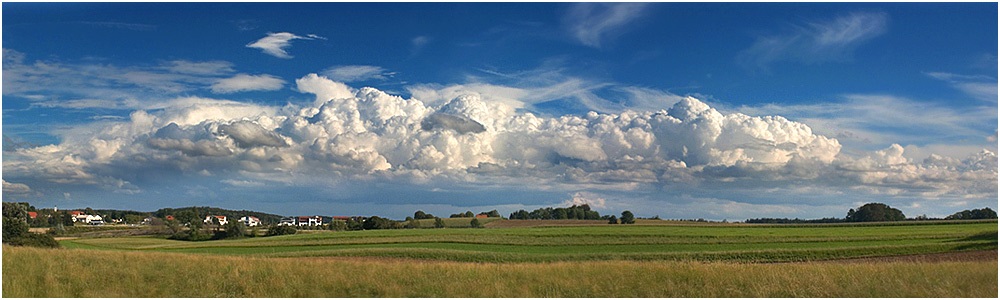
The one-hour journey to Tegernsee was a feast to the eyes, as the train glided through the lush Bavarian countryside. As we neared our destination, we could see snow-clad Alpine peaks. The location of the azure Tegernsee Lake is spectacular, with the high mountain range seeming to emerge from the lake itself. The skyline of the lakeside town, also known as Tegernsee, is a typical picture postcard view, with the steep church steeple gracing the scene. A walk through the tidy town is an adventure back in time. Well-preserved ancient homes of great charm line the narrow streets. Shops featuring locally-made hats, elegant clothing and jewellery are tempting for passersby to peep in.
One of the oldest buildings in Tegernsee is the Monastery of Benedictine Abbey founded in 746. The monks were also expert brewers and contributed greatly to the Bavarian tradition of beer-making. With the secularisation of the monastery in 1803, it was turned into the summer residence of the Wittelsbach royalty, who ruled Bavaria. This greatly increased the popularity of Tegernsee. The monastery building now houses a restaurant, offering fine local cuisine and beer. Our taste buds were tickled by thespecialties, served with peels of the finest turnips we had ever eaten. No wonder the people around us looked happy, healthy and energetic. Among them were some in typical Bavarian attire, the women in ‘Dirndl’ and men in manly ‘Lederhosen’ and hats with feathers and plumes.
The resort towns around Tegernsee Lake are connected by ferry services. Among the most attractive towns in the region is Rottach-Egern, at the southern end of the lake. The captain invited Rashmi in our family group to take over the wheel of the boat briefly. The highlight of our trip was the visit to a typical Bavarian farm at nearby Kreuth, where tradition is still paramount and hard work the norm. We were welcomed into a farmer’s home by a tall, handsome man dressed in eye-catching Bavarian attire. We were impressed by the dual-horse-drawn carriage parked in front of the farm house. It was quite a contrast to the sleek luxury automobiles we had seen the previous day at the BMW museum in Munich.
The ride in the carriage drawn by the robust horses on the village road was perhaps even more thrilling to us than driving super-fast on the German autobahn where there is no speed limit. We were kept warm in the carriage with soft blankets and a supply of local liqueur. As the carriage trundled up the slope and over a bridge, the farm came into view. We were shown round the farm and we tried our hands at feeding the cows. Used to the application of high-tech in every field in Germany, we were surprised to see butter being made in the age-old way by manual churning. The butter was utterly delicious at the meal we were served at the end of the visit.
As we made our way back to the Tegernsee railway station, we felt a longing to linger a little longer in the lovely area which has drawn quite a few well-known artists, writers and creative people to spend time there. Among them were the British historian, Lord Acton, and the Norwegian illustrator, Olaf Gulbranson, who worked for the satirical magazine, ‘Simplicissimus’. That adds one more element of nostalgia to Tegernsee.
Sumitra and Sethuram Seshadri(The authors can be reached at sumasesh@gmail.com)
Go to Top


